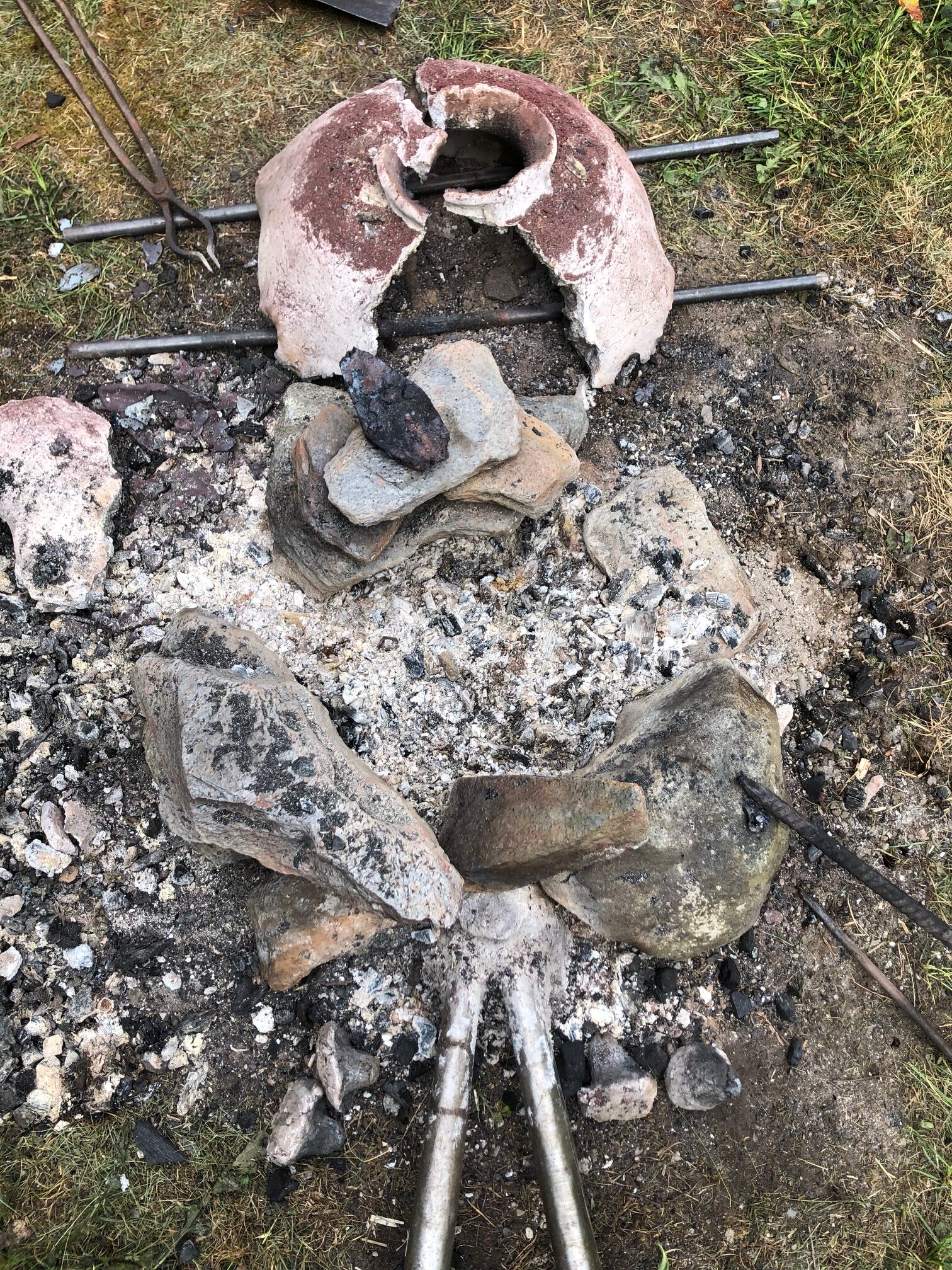
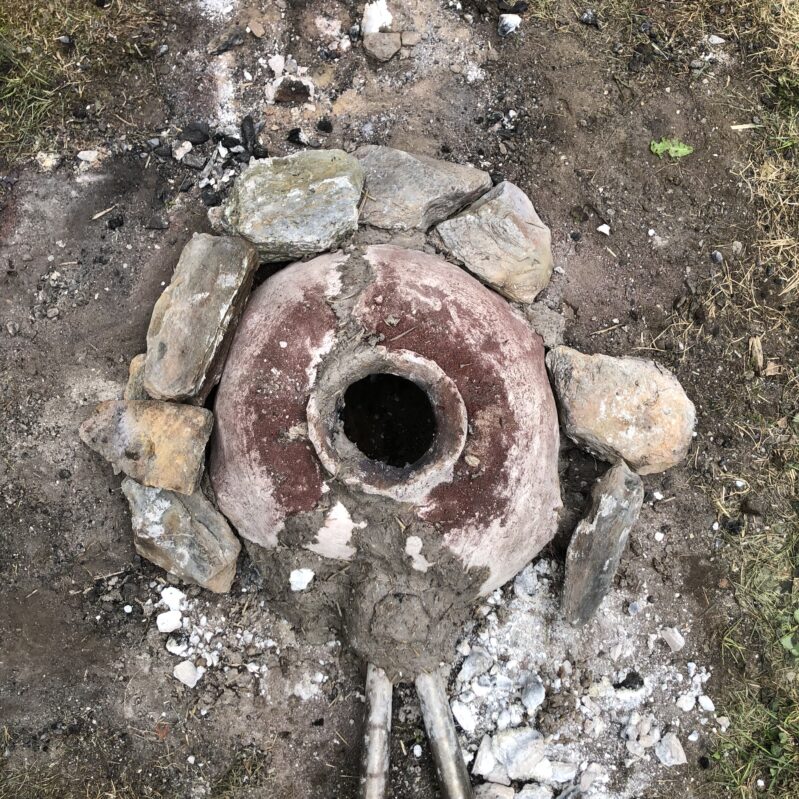
We had success smelting in the bowl furnace in 2024 when Brian Scott, Nick Tomlin, and I convened for a week of experimentation. We were able to smelt ore and successively remelt it to make a bar of sufficient quality to forge a replica iron age sickle. The question now was: could we repeat the experiment? Could we show that this process of smelting in a bowl furnace be not only possible, but viable in terms of material and energy efficiency? What even does ‘viable’ mean in the context of an iron age person on the isle of Ireland trying to make a bit of iron from earth to forge some tools or weapons?
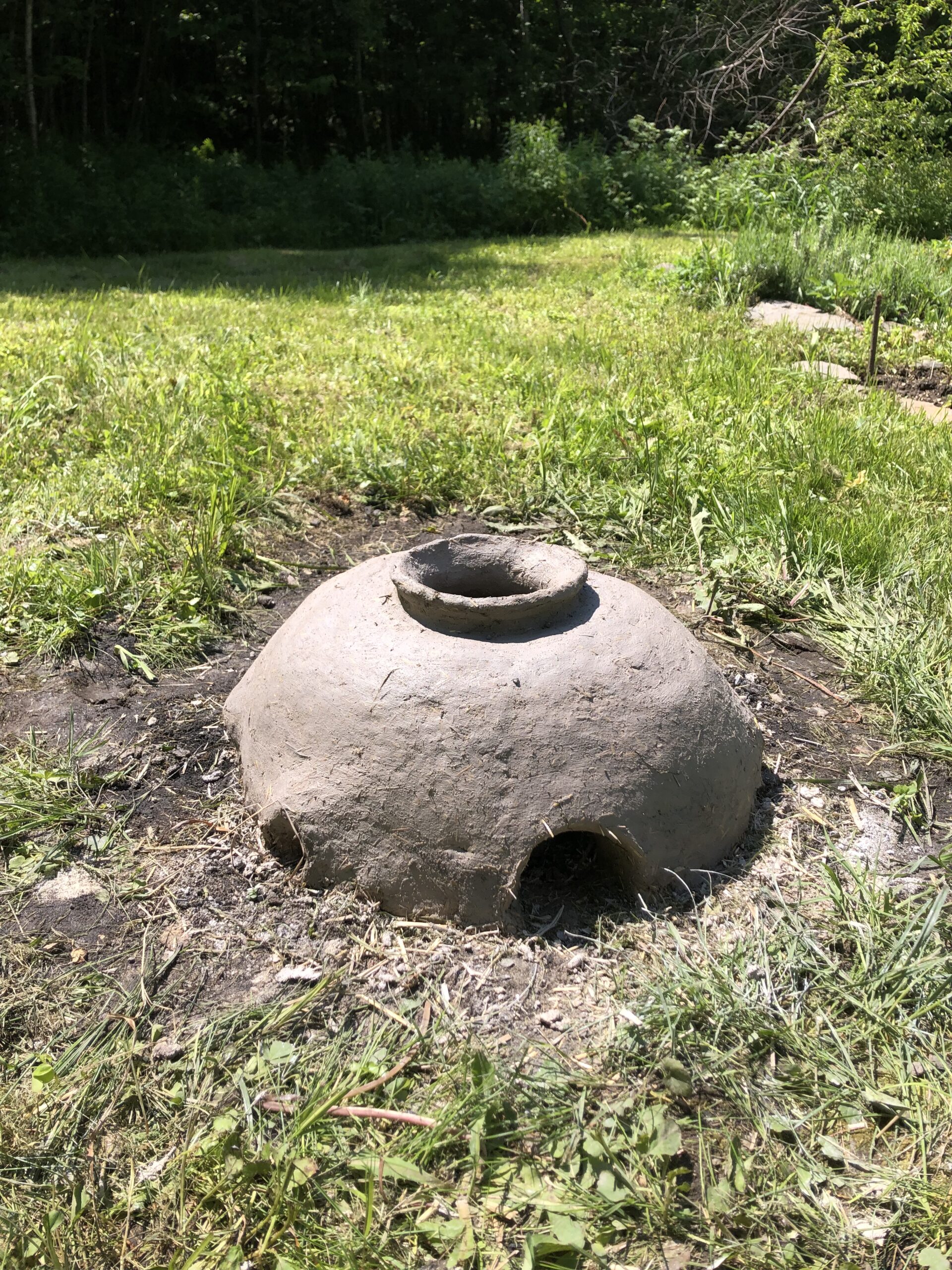
Nick Tomlin made the journey again in the summer of 2025 for another multi-day immersion into the bowl furnace. Nick had become intimately attuned to the breath-like pattern of the bellows the first go around, and there was no better suited to shifting their consciousness into the heart of the furnace while rhythmically pushing air through the leather lungs. The first step was rebuilding the domed bowl furnace. Care was taken to make sure it was as similar to the first as possible with the alteration of slightly larger holes to feed the rods through for removal at the end…
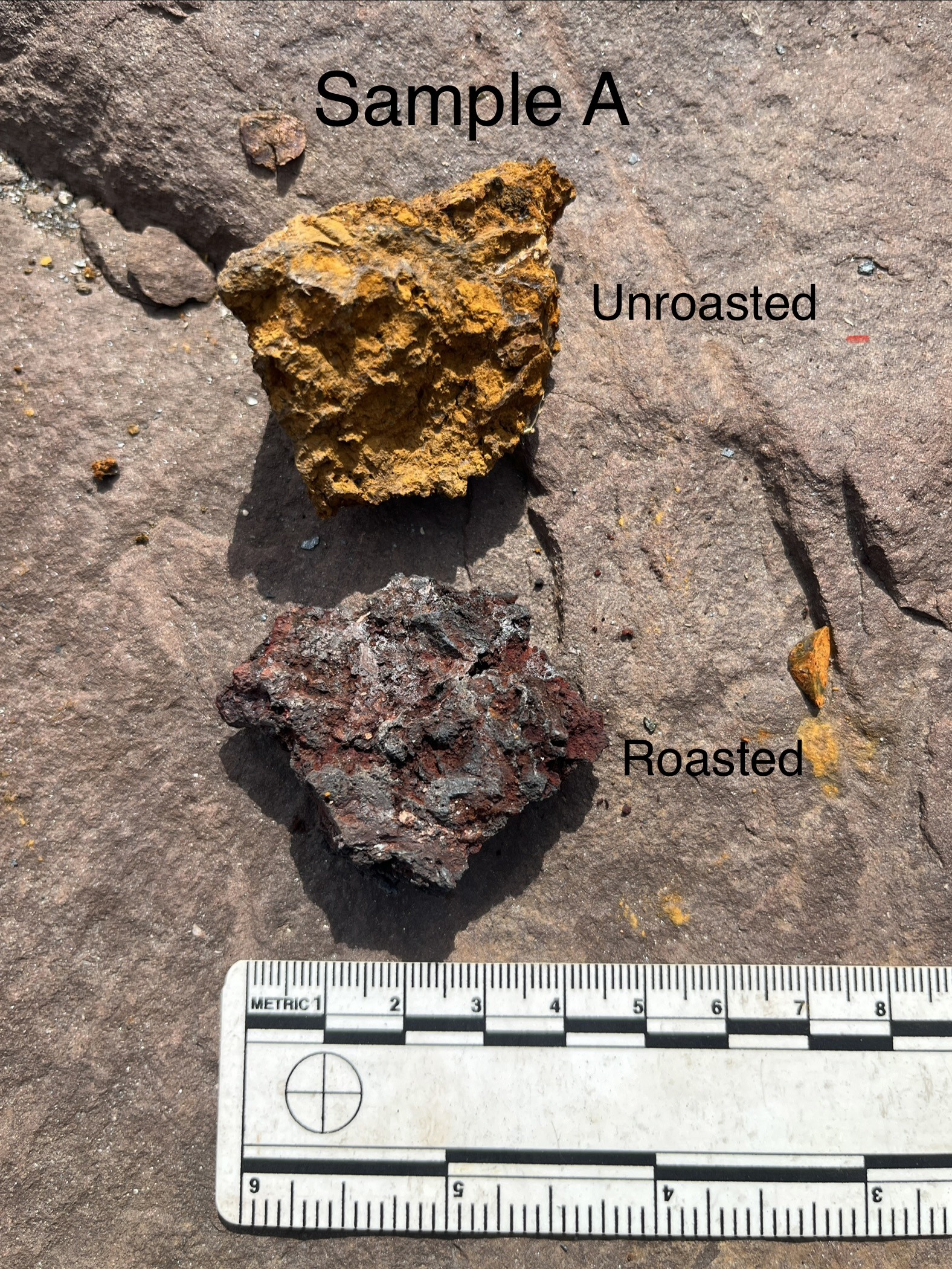
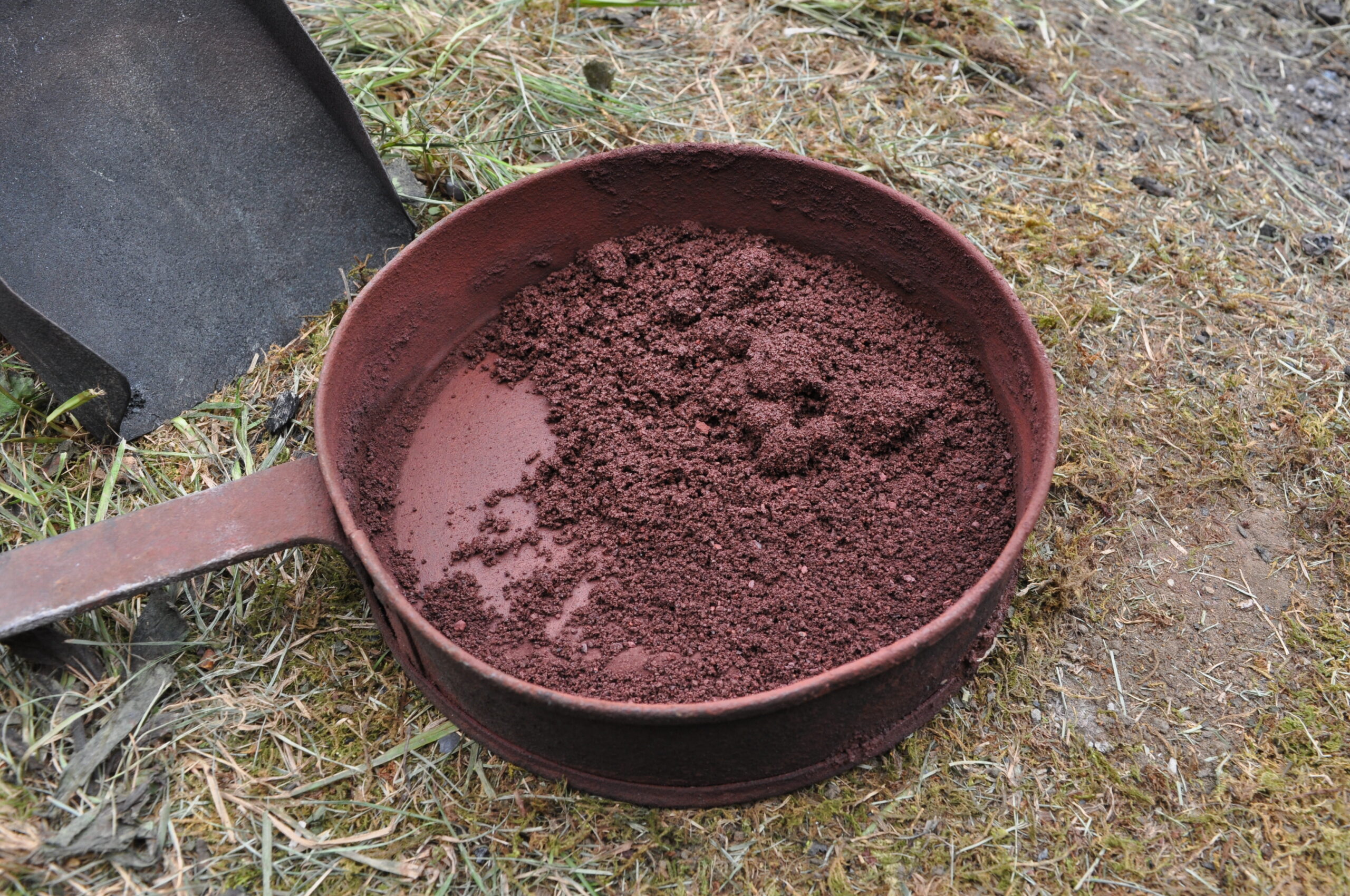
We used the same ore: a high quality limonite that we roasted and powdered. The roasting and the crushing would have similar effects: increasing the surface area to allow for the carbon monoxide to react as quickly as possible with the oxide. The roasting would also begin the reduction process for us. We needed all the advantages we could get given the size of our experimental furnace.
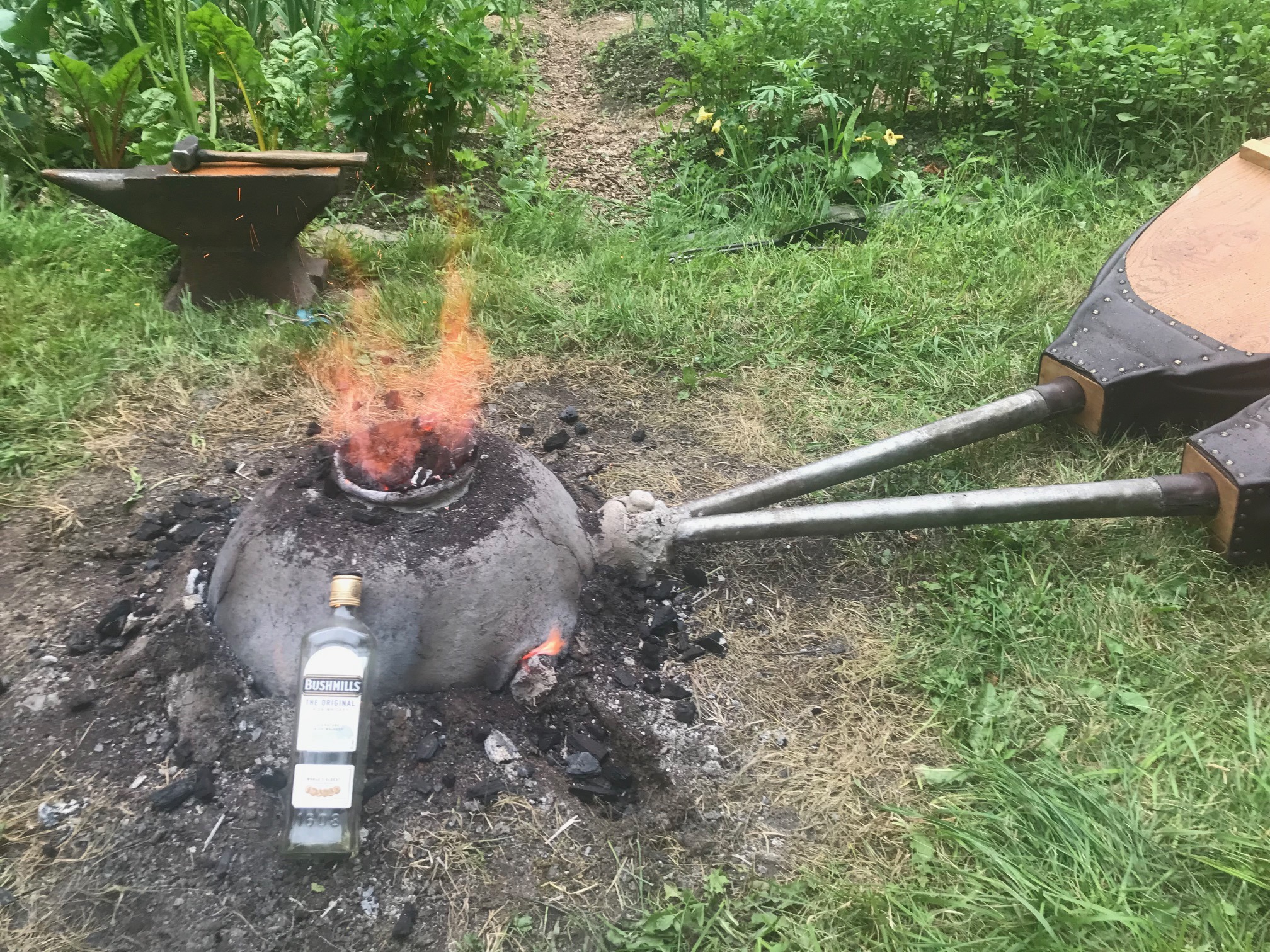
Brian couldn’t be with us in person, but we used modern technology to video call him in for the smelt. Of course we had to honor Goibniu, the Irish god of ironwork, with a fine Irish Whiskey. The smelt went well. We smelted as before, immediately converted the furnace to a remelting hearth and reconsolidated our iron, then forged the metal in a few heats into a rough bar. The furnace took a beating, however, and would need a patching — no issue there. We were pleased with the result and spent the evening discussing the smelt. This was another success in that we replicated our previous smelt, showing not only that the bowl furnace was a functional way to smelt ore, but with just a little extra charcoal a roughly consolidated bloom could be made much more forgeable with a secondary remelting step. We both were left with a feeling, however, that we were tiptoeing during the smelt on a fine line — balancing, and not quite landing on the potential of the furnace. We would try again in the morning…
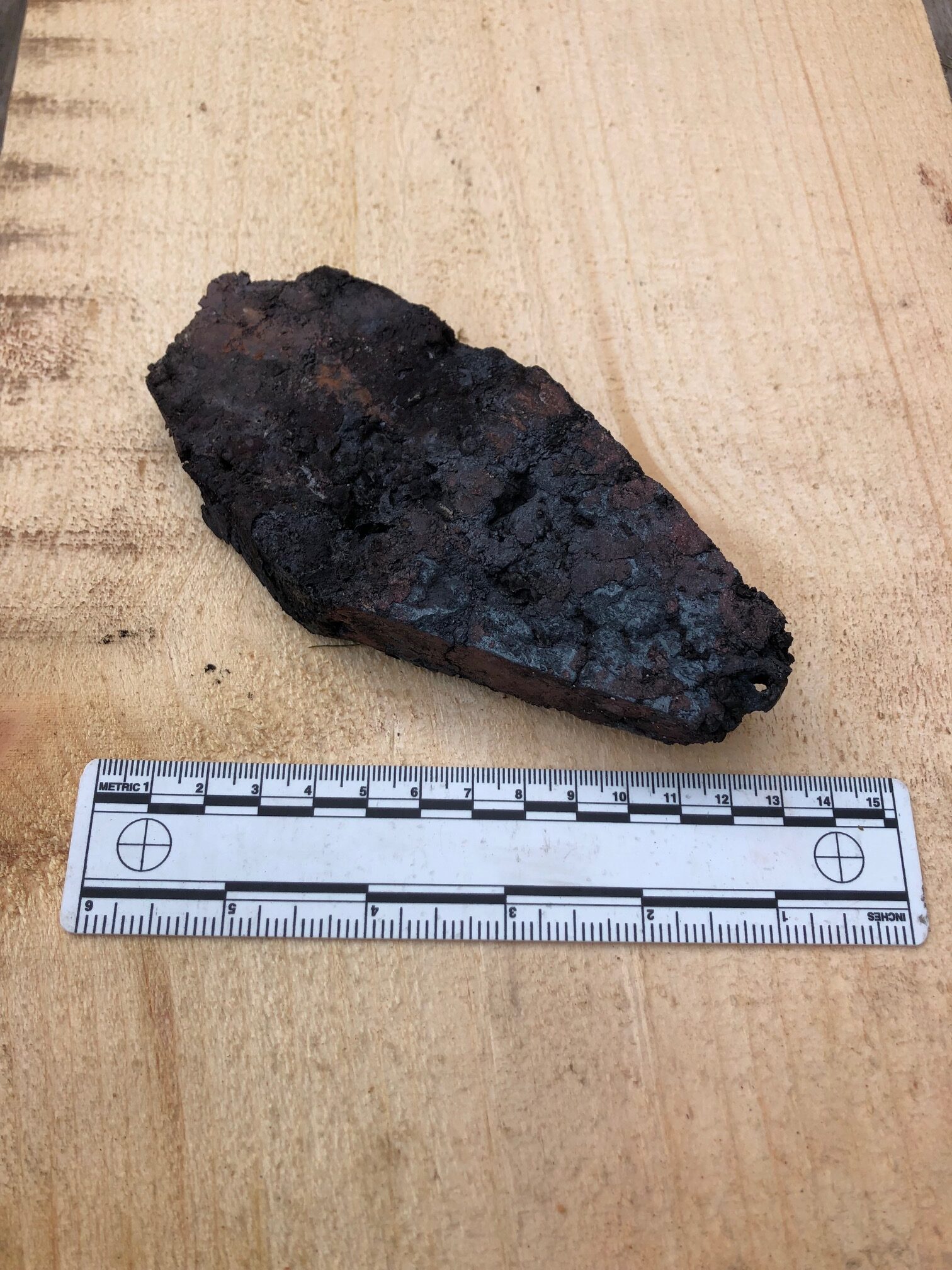
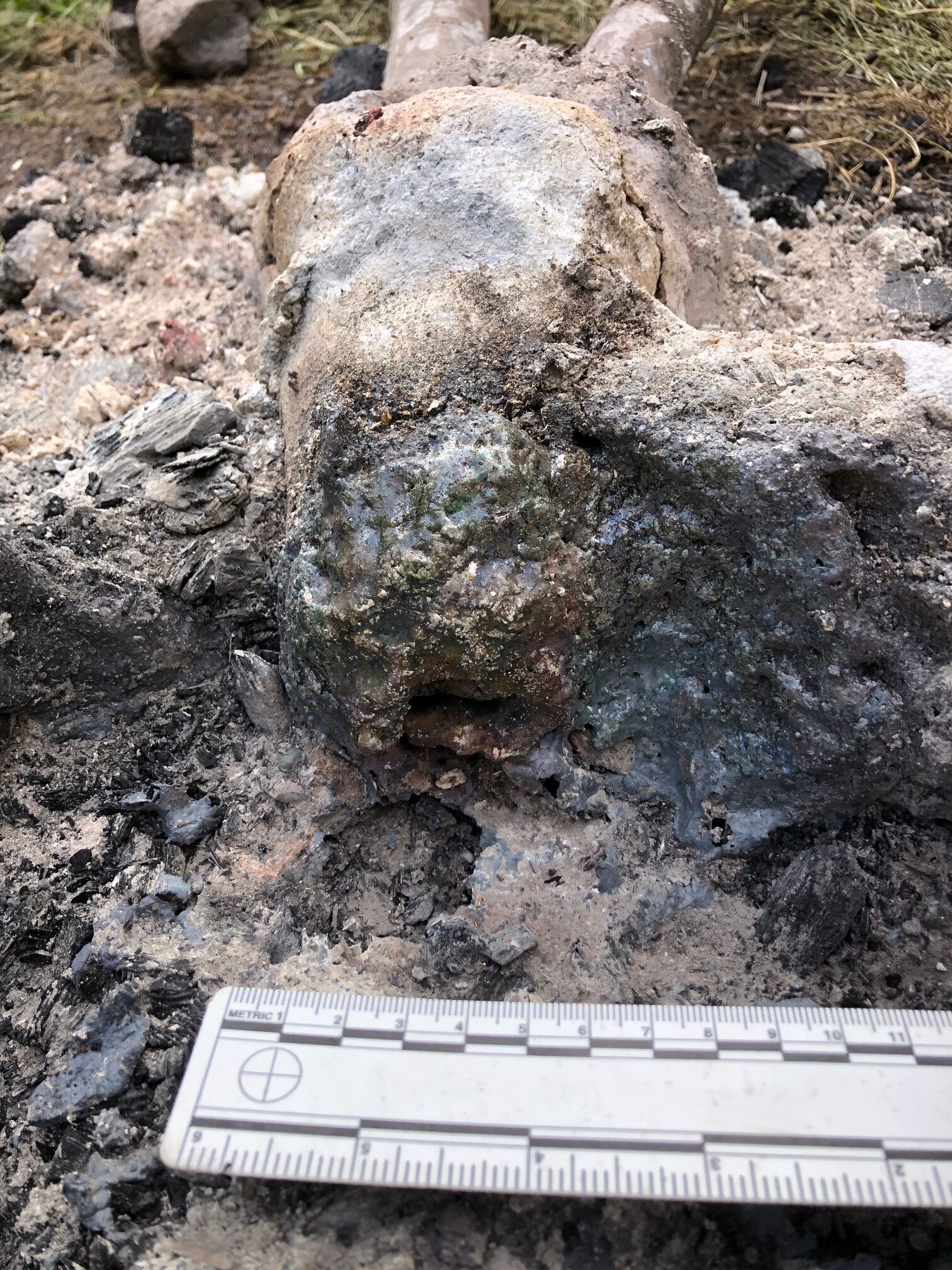
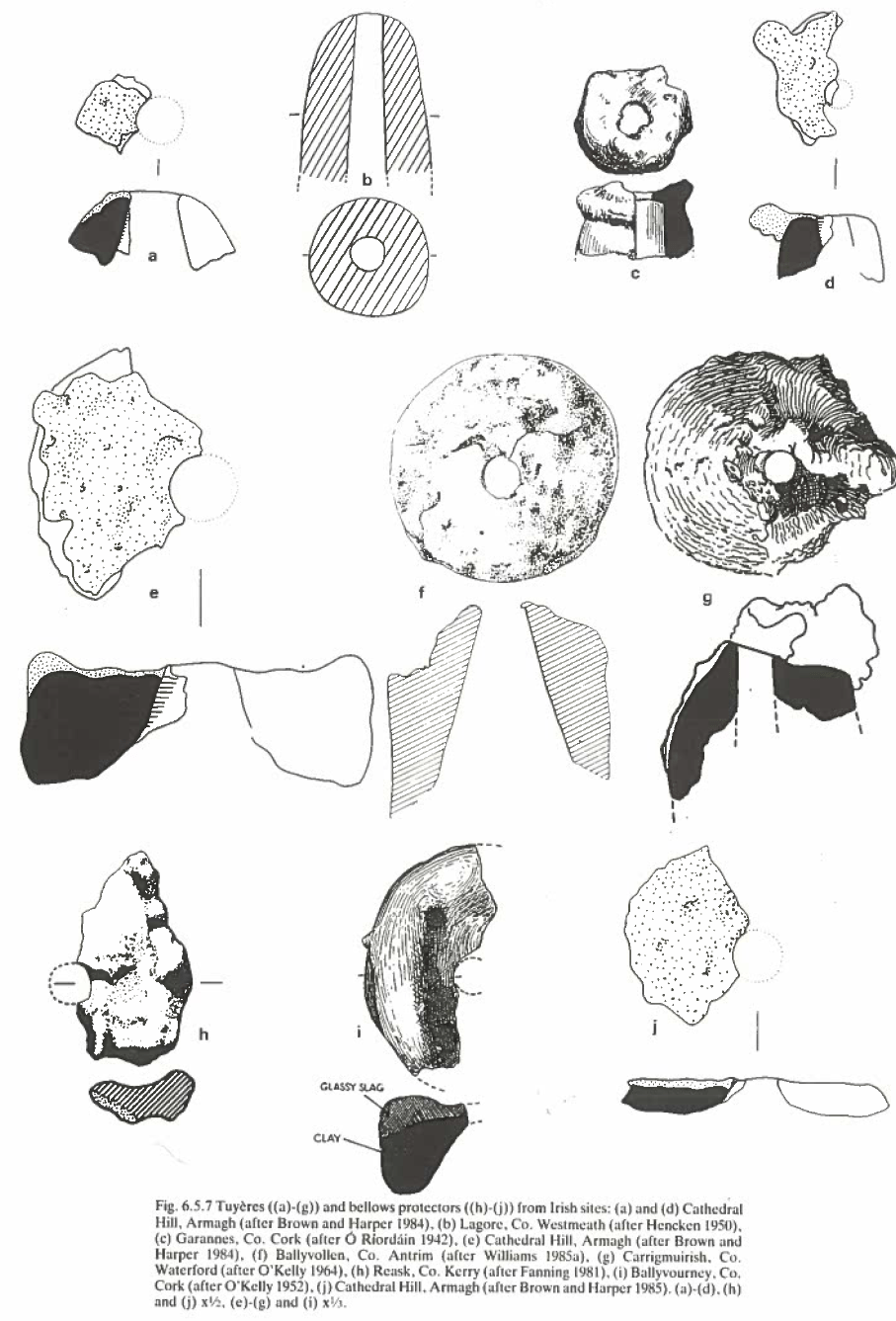
The resulting bloom from the first smelt and the vitrified tuyere orifice (left + middle). Irish archeological tuyeres and bellows protectors from Brian’s book “Early Irish Ironworking”, from which we modeled our tuyere dimensions (right).
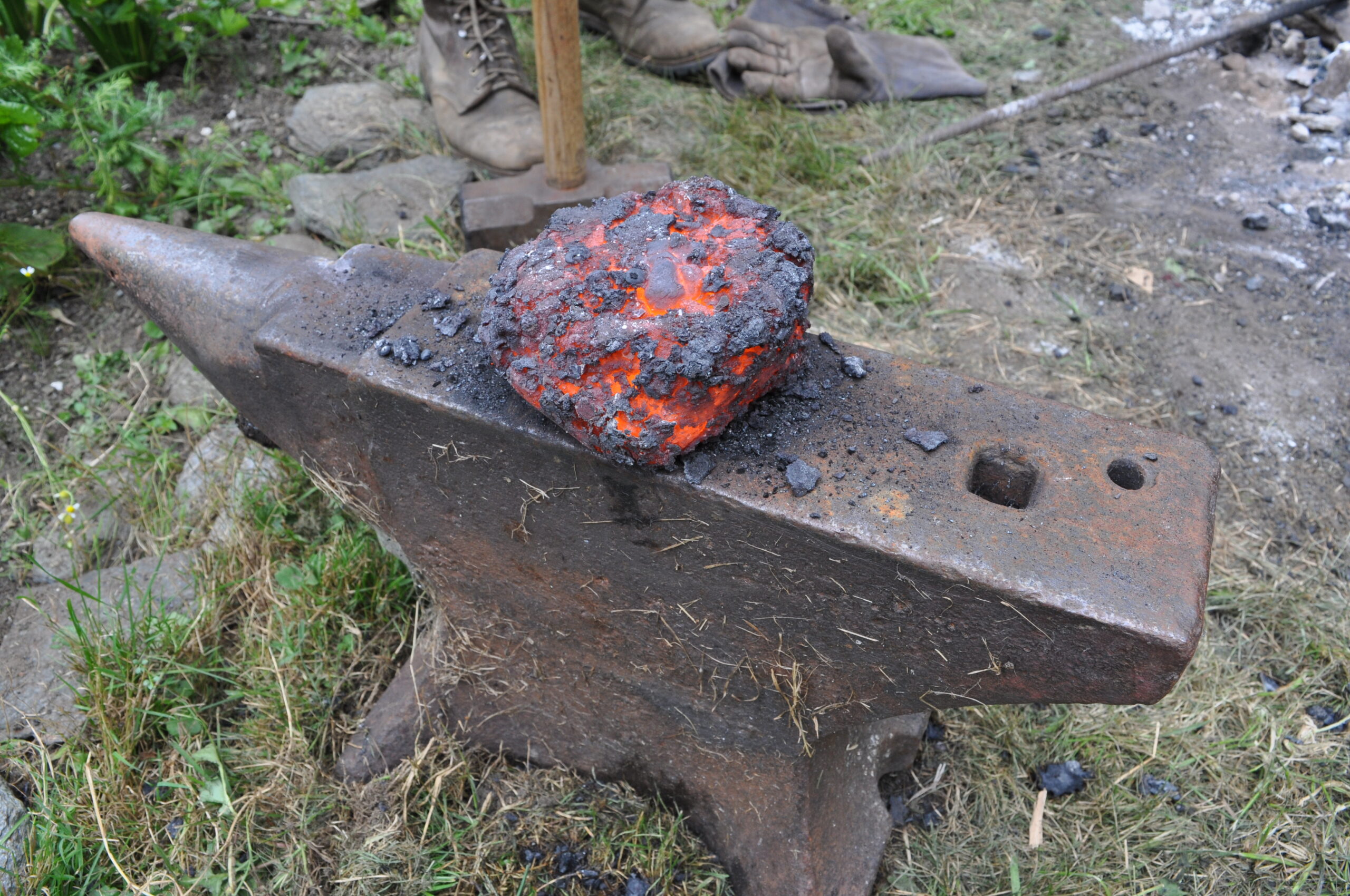
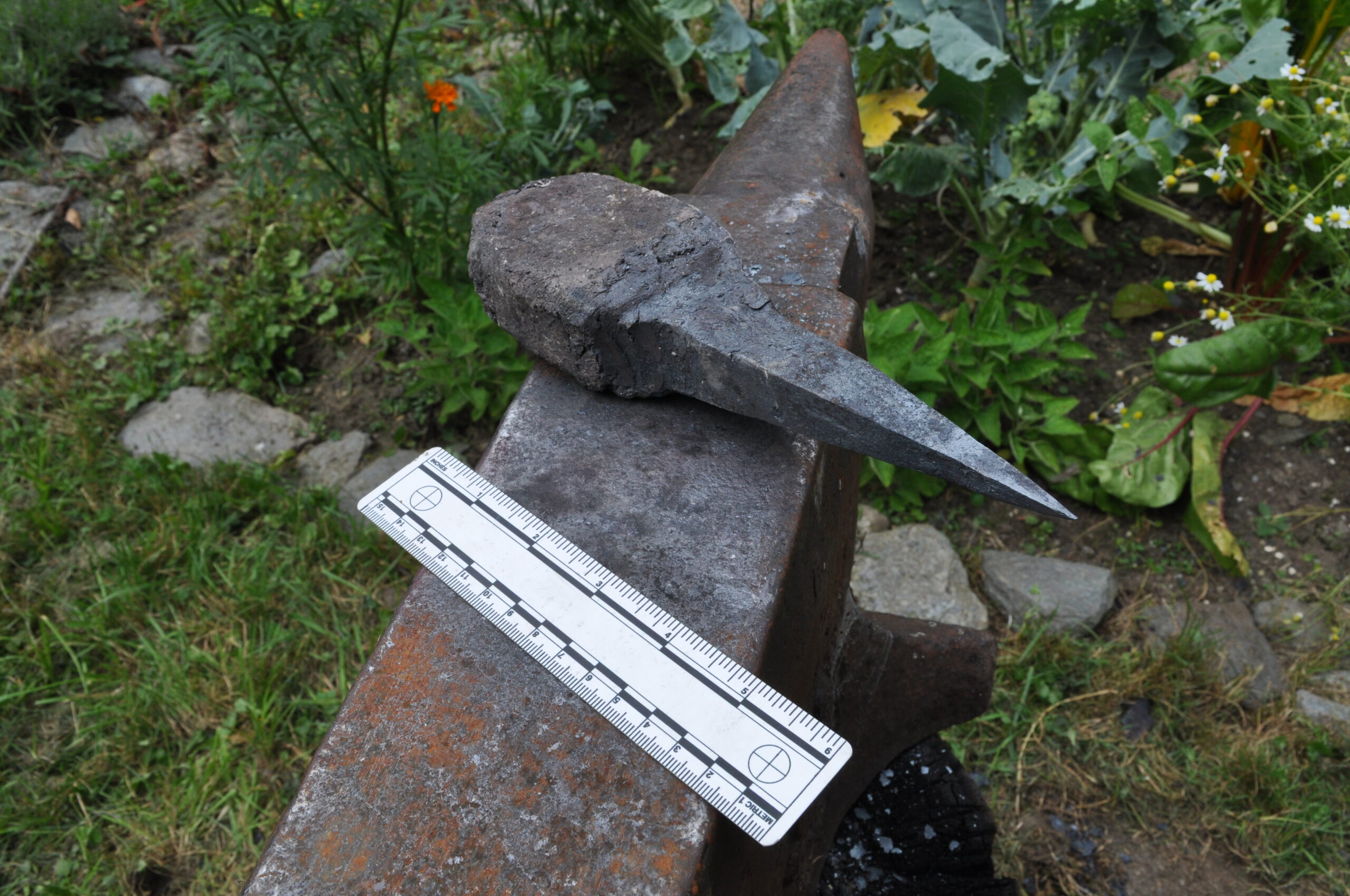
We patched up the furnace and commenced again, breathing life into the domed structure. For about 2 hours Nick pushed air rhythmically into the furnace, focused, moving his consciousness into the small, 2000 degree, chamber. I sat opposite, periodically wetting our powdered ore with water and feeding it into the small opening, covering it with charcoal and watching its consumption by the fiery heat. There was no need for spoken words now, but there was plenty of communication between the two of us and the furnace. Steady, consistent, a cantor not a gallop- as the old French Catalan smelters might have described it. All the ore went in. The fire burned down. The dome was removed with metal bars. The bloom dislodged with tongs and metal bars. It was solid and compact. Dense and forgeable. A few quick hits with the hammer on the anvil to access what had just been born. There was no need to remelt this bloom. Quickly, we converted the furnace to a forge. Nick’s bellowing increased. We were galloping now. A pointed ancony we forged, a traditional object show casing that not only did the bowl furnace produce a workable bloom but it did so with no need for remelting. This was beyond our hopes! Praise Goibniu!
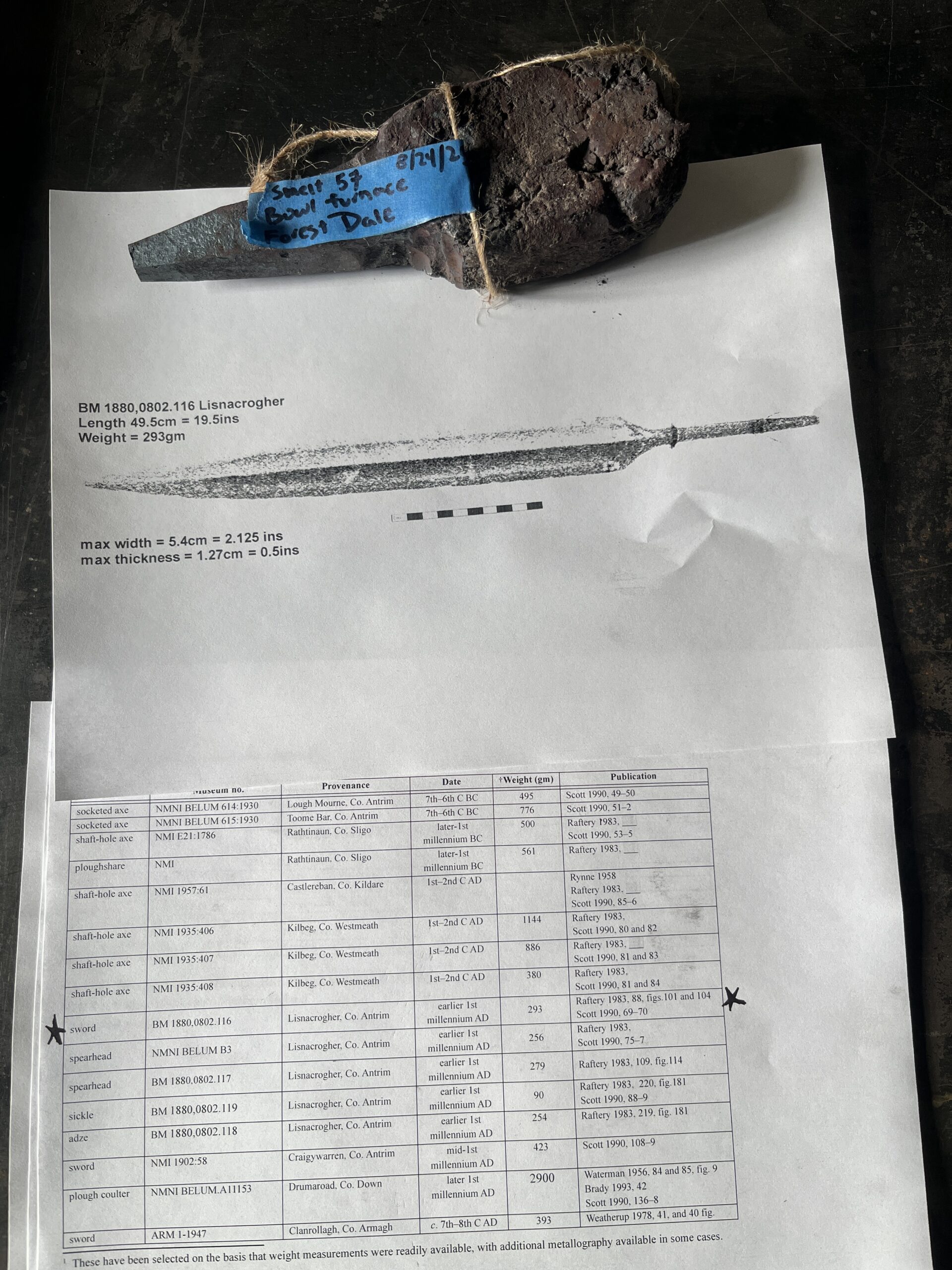
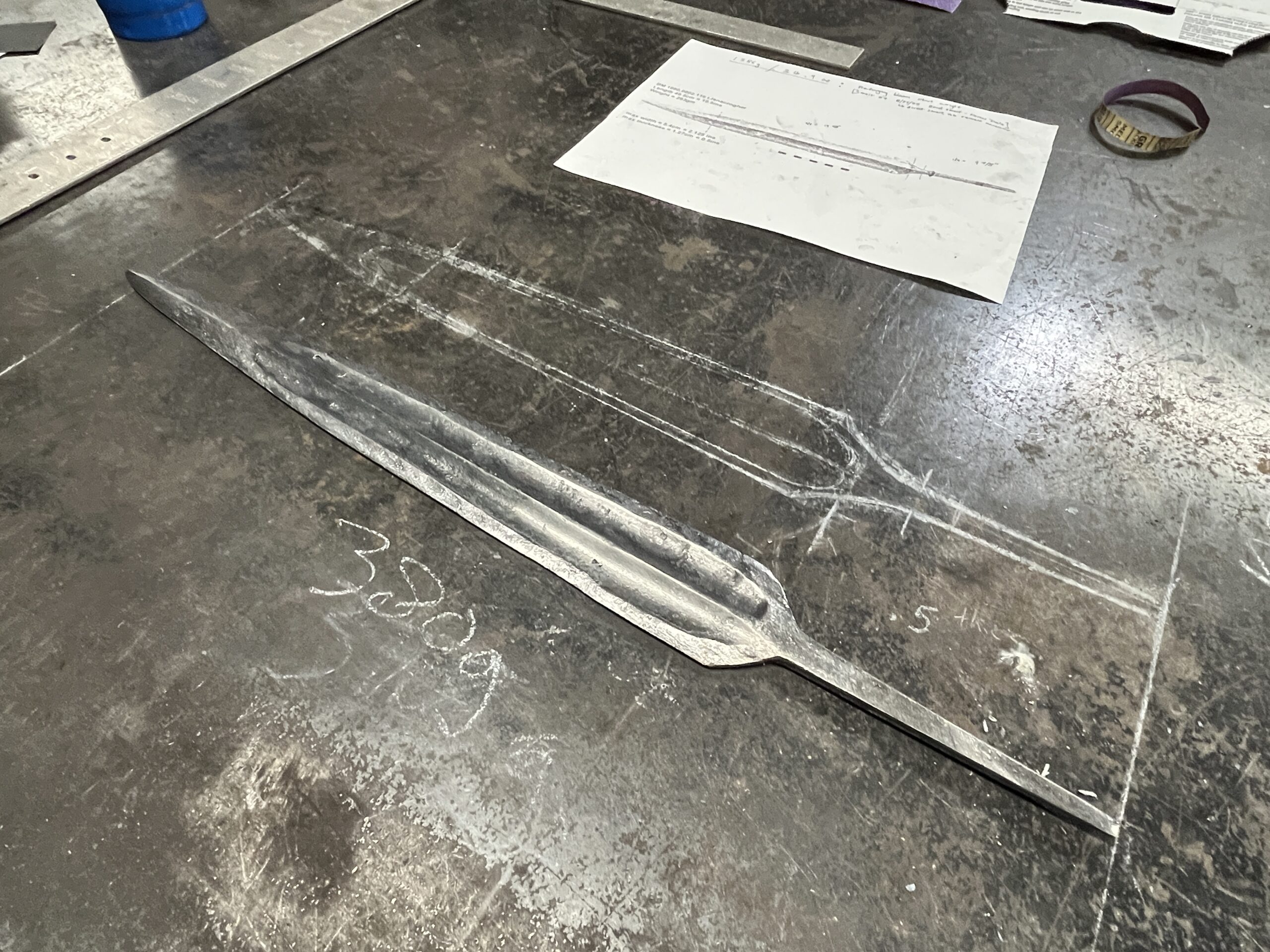
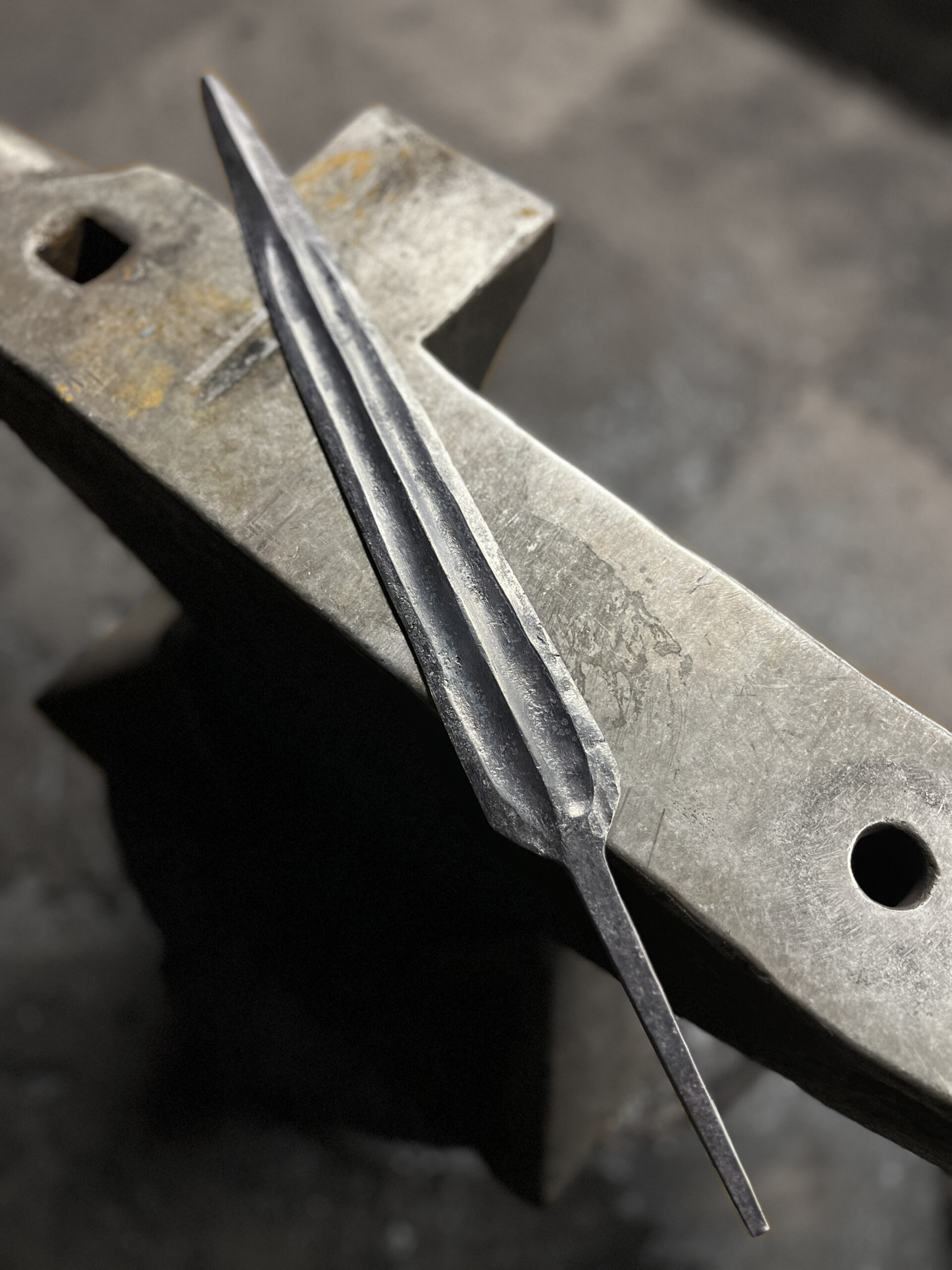
The next step was to see if we could forge a relevant object from the bloom without any folding as many of the ancient objects Brian analyzed while working at The Ulster Museum showed no signs of such, metallographically. We chose to try and replicate a 1st millennium AD Irish sword found in Lisnacrogher, co Antrim. For this, the bloom would come back to my shop; a small piece of it would be sent to Ireland for Brian to analyze with his microscope. This would give us a way to compare our bloom iron to ancient objects on the crystalline level. For now, however, my sight was focused on forging a small, double fullered, blade.
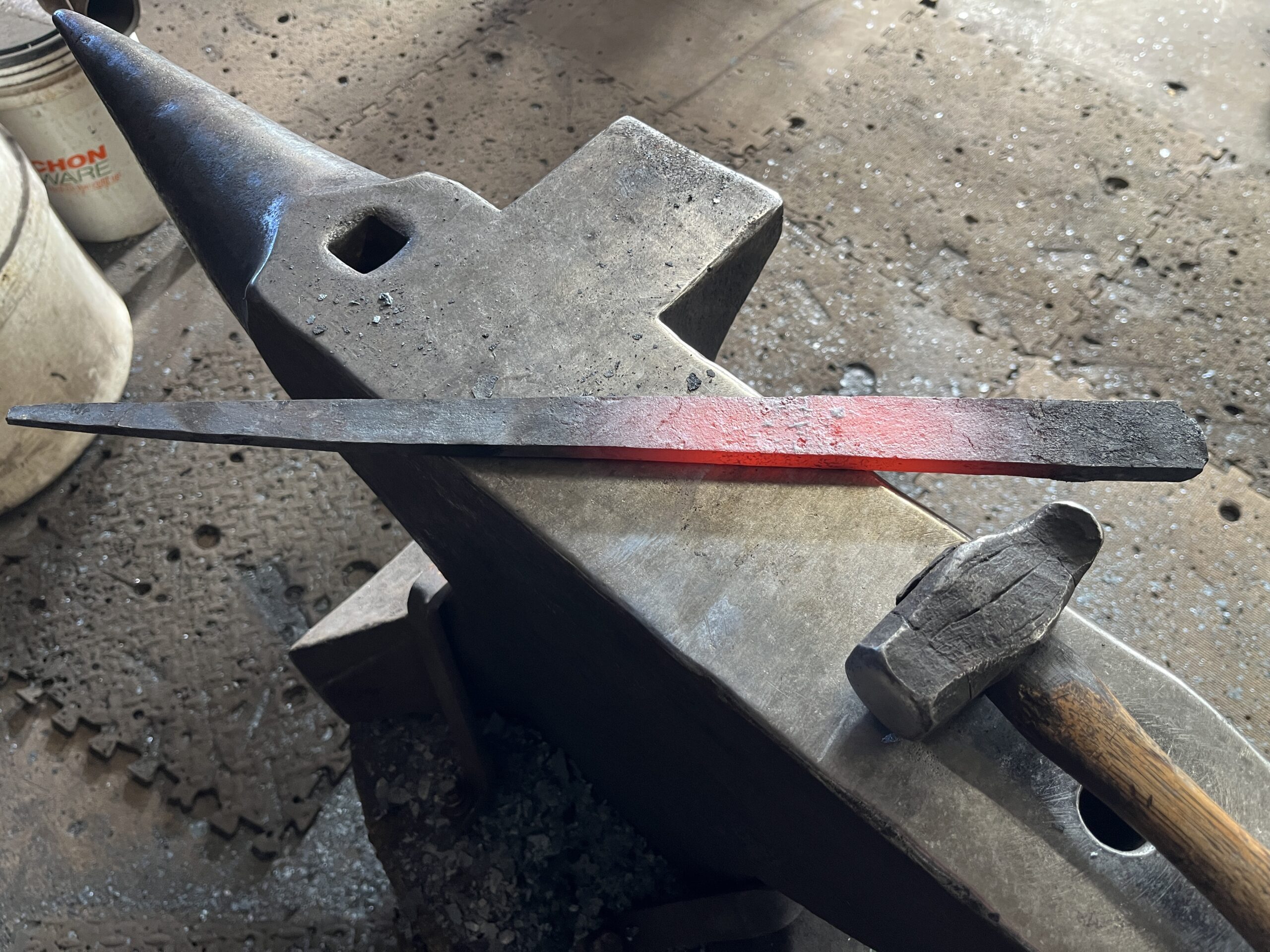
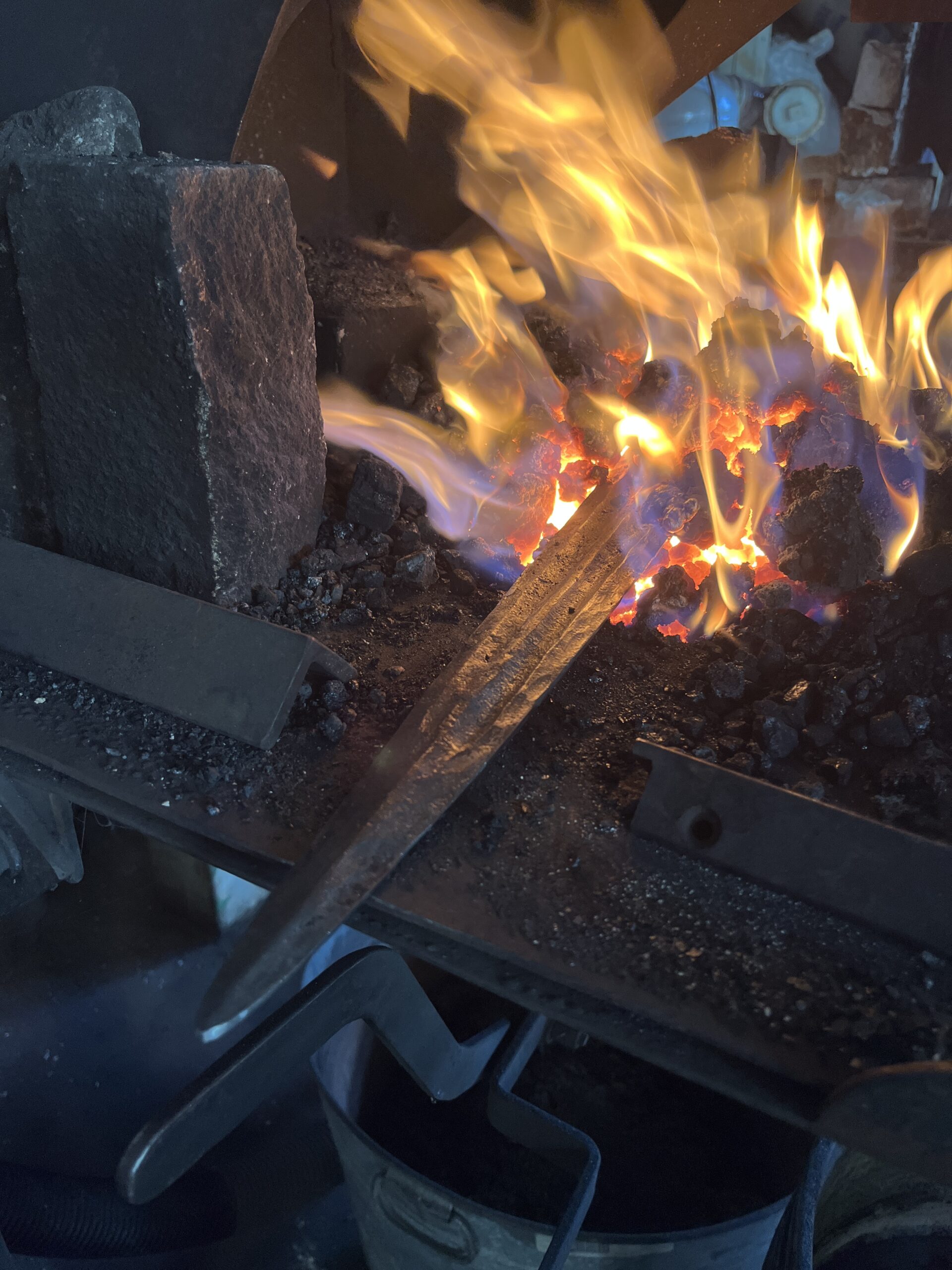
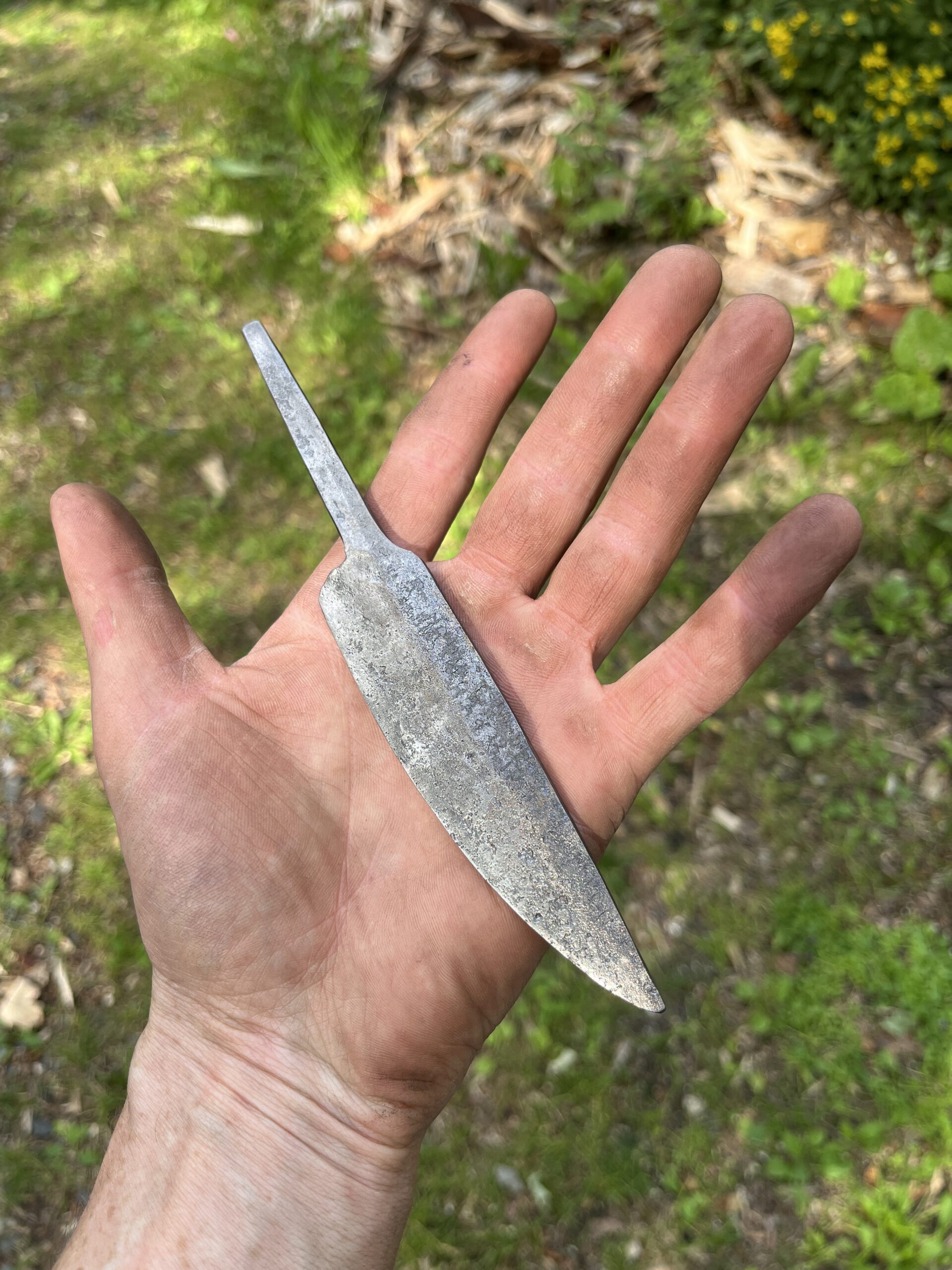
The iron worked agreeably, and I was able to forge the bloom straight into a bar, which then I fullered and forged into a sword. It was just the right quantity of material to get very close to the original dimensions of the Lisnacrogher sword. In fact there was a bit of iron left over in which I was able to forge a small, but very reasonable, knife that hardened in water (picking up carbon from the forge). In the end, we were able to forge two not insignificant tools from a single bloom smelted in the bowl furnace — and all without needing to remelt or forge-weld! This was an immense success in that the bowl furnace could be a viable method for smelting small quantities of ore into a few useful tools with relatively minimal material usage. We set the bar quite high for ourselves, and I’m certain we didn’t hit the limit of efficiency of this process. We had this result after less than 10 attempts. I can’t help but trust that a people who had centuries or even millennia to experiment with a similar process would be able to perfect it significantly further than we did.
Although we learned a lot, so many questions arose: Could we make the process more efficient in terms of usable iron made? Could it be done without the dome, thus saving significant time and materials? What if we shortened our charge times to expediate the process and save on precious charcoal? What if we used a different ore? What if we used one bellows instead of two? Do our artefacts compare metallographically to ancient ones? Could we learn the process well enough to intentionally smelt iron of varying carbon contents? How would this process compare in terms of material usage and time spent to a taller shaft-furnace smelt in which a large bloom was made?